Our Blog

Eating Right for Dental Health: What to Consume and Avoid

November 9th, 2021

Image below: Greensboro Children's Museum staff member helping with our joint Tooth Time & cooking demo in 2019. We will be hosting another Tooth Time Program at GCM on Wednesday, November 17, 2021. Click Here to sign up to participate this year!

Dental health starts in the...kitchen? You read that correctly! Of course, brushing, flossing, and regular dental visits are important, but they aren't the only things to consider when it comes to keeping your pearly whites in tiptop shape.

Most people understand that they should limit the sweets and candy they take in, but beyond sugary foods, what should and shouldn't you be consuming? Here are some do's and don'ts to help you eat right for your oral health.

The Do's of Eating for Dental Health

To promote good oral health, the majority of your diet should consist of the following foods:

    • Fiber Rich Fruits and Vegetables – These scrub bacteria off teeth while stimulating saliva flow to neutralize acids that can damage teeth. Examples of fruits and vegetables you should eat are apples, carrots, celery, and other water-based options.
    • Water – Water protects teeth and gums by stimulating the production of saliva, thereby reducing sugars and bacteria left on the teeth. Of course, water is a great alternative for soft drinks or other sugary beverages too.
    • Dairy Products – Dairy products are absolutely a "do"! Calcium, phosphates, and vitamin D in dairy products help strengthen teeth and prevent tooth decay.
    • Nuts – Different nuts offer different oral health benefits. For example, peanuts provide calcium and vitamin D, whereas cashews stimulate saliva and help clean the teeth.

Keep in mind that even healthy foods may contain sugar, so it's always important to brush your teeth twice a day.

The Don'ts of Eating for Dental Health

Knowing what you shouldn't eat often is as important as knowing what you should. While some healthy eating don'ts are obvious, some aren't as well known:

    • Candy and Sweets – Sticky sweets adhere to your teeth and can't be easily washed away by saliva. This can cause tooth decay, especially if you regularly snack on sweets between meals.
    • Starchy Carbohydrates – Bacteria feed on the simple sugars that are left by starchy carbohydrates like chips, pasta, bread, or crackers. These bacteria produce acid, which can cause plaque buildup and tooth decay over time.
    • Soft Drinks – Like sweets, most regular soft drinks are packed with sugar and even diet soft drinks contain harmful levels of phosphorous. This can wear down the enamel on your teeth and leave them susceptible to decay.
    • Acidic Foods – Acids in citrus foods and even pickles can also wear down enamel.
    • Dried Fruits and Juices – Both juices and dried fruits have highly concentrated levels of sugar that can cause problems similar to candy and sweets.

Eating Healthy for Your Teeth Means Eating in Moderation

You don't have to go to extremes. You can still enjoy many of the don'ts in moderation and if you brush directly after consuming them. Limiting the don'ts and focusing on the do's will not only give you a brighter smile, but also help to improve your overall health.


Sources:

Diet and Oral Health. (2014, March 31). Retrieved June 2, 2015 from (http://www.webmd.com/oral-health/diet-oral-health

Patel, A. (2014, April 3). 14 Best and Worst Foods for Your Teeth. Retrieved June 2, 2014 from http://www.huffingtonpost.ca/2014/04/03/foods-for-teeth-_n_5085621.html

How to Care for Your Infant's Oral Health

October 27th, 2021

Teeth or no teeth, your infant's oral health should always be a top priority. But, how are you supposed to care for your baby's teeth? There are numerous steps to take and each serves an important purpose in preparing your baby for a future smile he or she will be glad to show off.

First: Caring for Your Baby's Gums

Although your baby is born without visible teeth, it's still important to care for his or her gums. If you don't, you'll leave harmful bacteria behind that can damage teeth as they begin to emerge.

You won't need a toothbrush or toothpaste for gum care. Instead, you can use a soft, slightly moistened cloth or gauze to wipe down your baby's gums, especially after feedings and prior to bedtime.

Second: Caring for Your Baby's Teeth

Your baby's teeth will begin to emerge from the gums at around 6 months of age, at which point you'll need to begin using a toothbrush for cleaning. It's best to purchase a toothbrush with soft bristles, a small head, and a large handle to make it easier for you to clean and more comfortable for your baby.

You should start with very limited amounts of toothpaste (fluoride-free) and, as more teeth emerge, you can increase the amount. This will gradually familiarize your child with the taste and texture of toothpaste.

Third: Visiting the Dentist

It's vital that you schedule your baby's first dental appointment before his or her first birthday or within 6 months of his or her teeth appearing.

This will allow the dentist to identify potential problems caused by injuries, illnesses, or development complications. If issues are identified, the dentist can treat them or refer you to a pediatrician should something go beyond the teeth's surfaces.

General Preventative Dental Care for Your Infant

Visiting the dentist early is one type of preventative care for your infant. There are additional things that you can do to reduce the likelihood of cavities as teeth continue to emerge:

  • Only put formula, breast milk, and water in baby bottles to avoid "baby bottle tooth decay," and be sure to clean gum/teeth after the consumption of formula or breast milk as both contain sugar.
  • Decrease your child's sugar consumption, particularly between meals, because sugar feeds bacteria that can attack your baby's teeth.
  • Never put anything sweet on your baby's pacifier to encourage him or her to use it.

Early Oral Health Sets Your Baby Up for a Beautiful Smile

Baby teeth are functionally important during childhood and also serve a critical role as place holders for adult teeth. By caring for them properly from the very beginning, you can promote oral health and create a great foundation for a bright, beautiful future smile.

Sources:

Basic Dental Care - Infants and Children. (2014, November 14). Retrieved June 2, 2015, from http://www.webmd.com/oral-health/tc/basic-dental-care-infants-and-children

Caring for Your Baby's Teeth. (2014, November 6). Retrieved June 2, 2015, from http://www.webmd.com/oral-health/dental-health-dentures


5 Tips to Manage Your Child's Dental Anxiety

October 18th, 2021

Dental anxiety is prevalent among young children and, in many cases, can stem from an adult's own dental fears (whether you recognize them or not). If left unmanaged, going to the dentist can become an unpleasant ordeal for children. But it doesn't have to be that way.

As a parent, you can take steps to manage your children's dental anxiety before it interferes with oral health. This will help ensure they have a beautiful, healthy foundation for their smiles from childhood to their teenage years and beyond.

  1. Offer a Simple Explanation of What to Expect

As a parent, you need to tell children when they'll be visiting the dentist and what it will be like. After all, just the look of a dental office and meeting a stranger can be frightening.

By giving children basic information about what to expect during their visit, you can put their minds at ease and make them feel more comfortable. You don't have to go into complex detail because the dentist is trained to answer questions children ask in a straightforward, easy-to-understand manner.

  1. "Practice" for a Dental Visit

Familiarity breeds comfort and this certainly applies to children and the dentist! For some children, dental anxiety is the result of not knowing what will happen at the office.

A great way to overcome this is to pretend play a dental visit. Have children sit in the "chair," count their teeth, and hold up a mirror to show them how a dentist might examine their mouths. You can even encourage children to brush their dolls' or stuffed animals' teeth to get more accustomed to the dental routine.

  1. Don't Offer a Reward for Good Behavior

It can be tempting to promise children a lollipop, movie, or other physical reward for good behavior at the dentist, but doing so could actually make them expect a negative experience, thereby increasing their apprehension.

Instead of bribing children with a material incentive, offer verbal praise following an appointment. This is a great way to show that you're proud of them and convey that going to the dentist isn't so bad.

  1. Explain Good Oral Hygiene

Kids don't always understand why checkups are good for them, but they do understand tangible outcomes. For example, telling children they're getting strong because they eat their veggies is better than trying to explain vitamins and minerals they won't understand.

The same goes for dental visits. Be sure children understand that visiting the dentist will make their teeth strong and keep their smile looking great. These things can motivate them to want to go to the dentist (or tolerate it at the very least)!

  1. Keep it About Your Child

It can be tempting to use your own dental experiences to put your children at ease, but you shouldn't. You may have some dental anxiety that you don't realize and could inadvertently convey this to your children.

Keep all of the attention focused on your children. Doing so will give them the confidence they need and reduce the likelihood of feeling anxious over their upcoming dental appointment.

Start Dental Visits Young and Start Them Right

Engaging in pretend play, providing simple explanations, focusing on your children and reinforcing positive experiences are useful tips to help manage pediatric dental anxiety.

Start dental visits at a young age between six months of age and no later than one year old. By starting visits young and starting them off right, you can create a positive early association with the dentist and avoid the screaming and crying matches that many parents accept as inevitable.

Sources:

Easing Your Child's Fear of the Dentist. (2014, October 9). Retrieved June 2, 2015 from http://www.webmd.com/oral-health/easing-childrens-fears-dentist

Port, D. (n.d.). 8 Tips to Help Kids Overcome Fear of Dentists. Retrieved June 2, 105 from http://www.parents.com/health/dental/kids-overcome-fear-dentists/

Baby Teeth and Bad Hygiene: What's There to Lose?

October 13th, 2021

Don't fall for it, parents! Just because baby teeth are temporary doesn't mean they don't matter. Despite what naysayers and wishful thinkers might have you believe, forgetting to care for primary teeth comes at a steep price for your child.

If you're questioning whether it's worth wrangling your little one into a dental routine now, these facts prove that adopting good habits early on can pay off big time for your child's oral health down the road.

1: Baby teeth help shape your child's speech.

Forming and pronouncing words correctly depends largely on the presence and alignment of baby teeth. Premature loss of any primary teeth can result in speech impediments such as a slur or lisp, and negatively impact both a child's ability to communicate and his or her self-esteem. Depending on the severity of the case, a speech pathologist may be required to help correct the problem(s).

2: Baby teeth facilitate proper chewing and eating.

In addition to efficiently breaking down solid foods, chewing correctly is important for other reasons. Tooth loss and/or alignment issues can cause unnecessary stress to the jaw and result in serious complications over time, and chewing problems can also interfere with the development of key facial muscles. Improper chewing can even contribute to a nutritional imbalance if poor oral health starts impacting food choices.

3: Baby teeth act as a placeholder for permanent teeth.

Permanent teeth will emerge, but how and where has a lot to do with your child's first set of pearly whites. Each primary tooth reserves a spot for a permanent tooth, but the loss of this initial placeholder can cause shifting and result in harmful misalignments. Cosmetic issues aside, misaligned teeth can make brushing and flossing more difficult, result in crowded and/or impacted teeth, and contribute to jaw disorders such as TMJ.

4: Maintaining healthy baby teeth helps to instill effective dental habits.

Teaching the ins and outs of good oral hygiene can have a lifelong impact on your child. Introducing healthy dental habits early on can solidify the importance of preventative dental care, making it easier for him or her to stick with these habits throughout adulthood. This can mean a lifetime of optimal oral health, and significantly reduced chances for costly dental problems.

Dental Tips for Baby Teeth

Brushing and flossing may not be your child's favorite activity, but introducing healthy habits the moment that first tooth appears can make it easier for both parent and child to stick to a routine.

While there is no set timeline for baby teeth to erupt, here are some general guidelines the American Dental Association provides for cleaning and caring for baby teeth:

  • From birth (no teeth present): wipe gums clean with a moistened gauze or cloth
  • Ages 0-3 (teeth present): brush twice daily with a tiny dab of fluoride toothpaste*
  • Ages 3-6: brush twice a day, but use a pea-sized amount of fluoride toothpaste
  • Any age when teeth touch each other: add flossing to your daily routine

Paying a visit to the pediatric dentist before your child's first birthday, and getting regular checkups are also crucial to his or her oral health. Depending on your child's individual situation, certain in-office treatments and/or instructions for at-home care may be recommended.

*Note: Fluoride toothpaste should be expectorated and not swallowed. If you feel your child will swallow the fluoride toothpaste it can be substituted with non-fluoride toothpaste.


Sources:

Baby Teeth Care: Brushing First Teeth, Teething, Gum Care, and More. (2014, November 6). Retrieved June 12, 2015, from http://www.webmd.com/parenting/baby/caring-babies-teeth

The Importance of Baby Teeth. (n.d.). Retrieved June 12, 2015, from http://www.dentalassociates.com/pediatric-dentistry/importance-baby-teeth/


greensboro pediatric dental office map
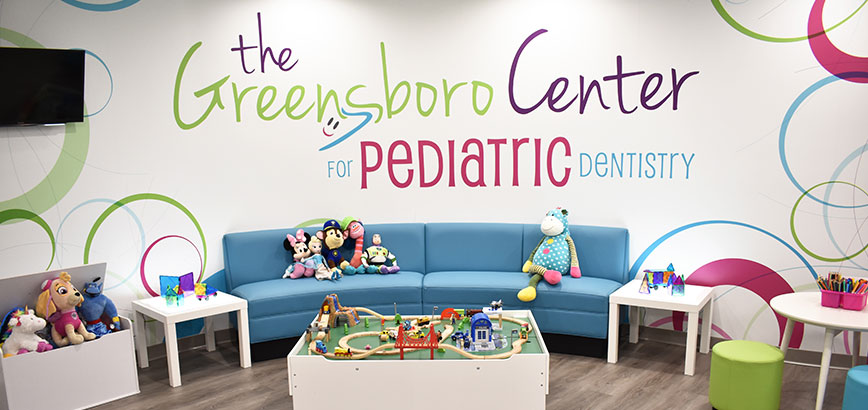
Waiting area of the Greensboro Center for Pediatric Dentistry featuring a blue couch, toys, a play table with a train set, and a wall with playful decor. greensboro pediatric dental office Location